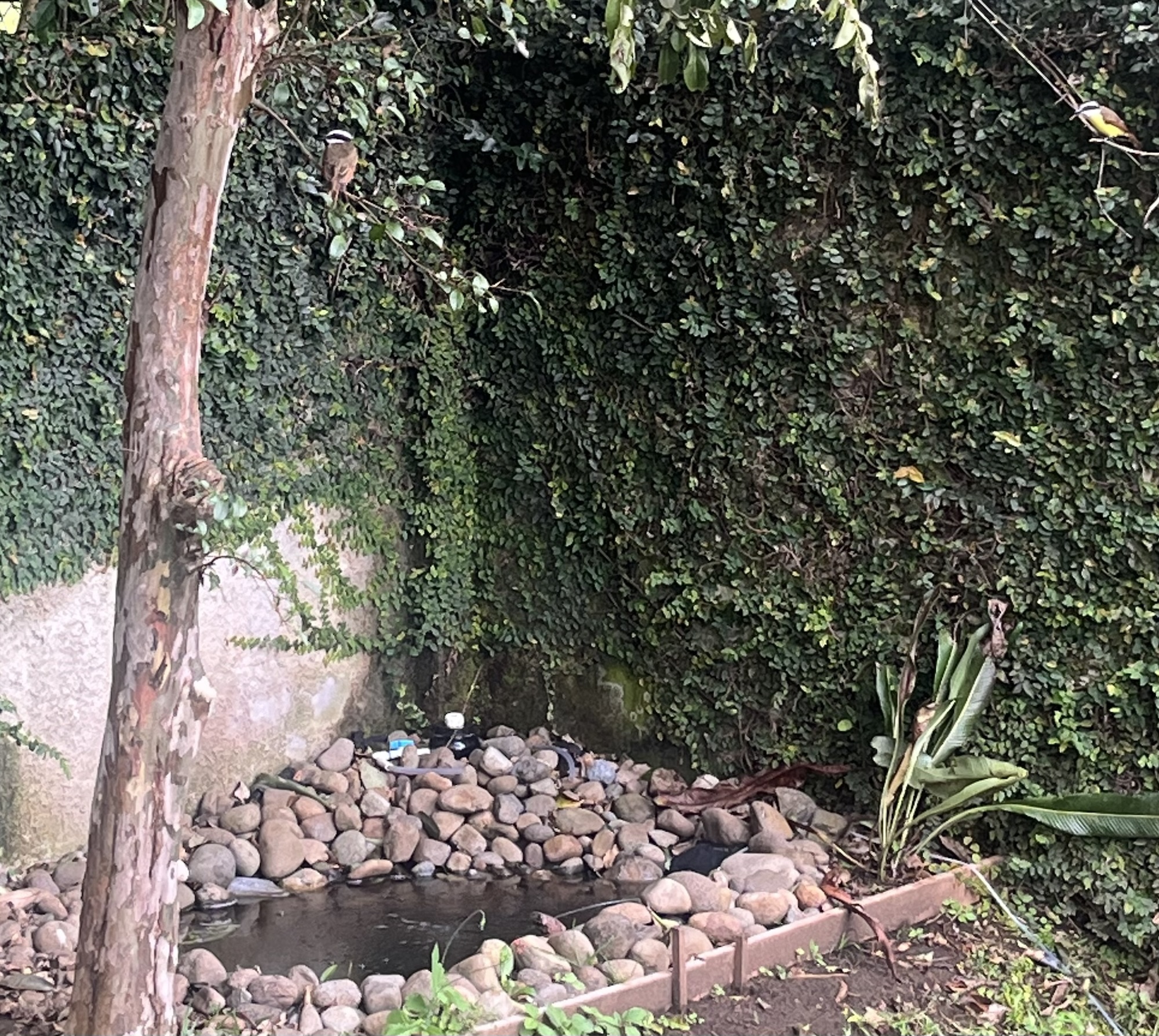
In 2024 I decided to build a wildlife pond in my backyard. At the time I was reading Rewilding North America by Dave Foreman [1] and was inspired to apply some of the principles expounded in his framework at a small scale. Throughout my research I also came upon Thomas Biebighauser’s wetland restoration work [2], which helped greatly from a technical perspective. At the time I was not thinking of documenting the process so failed to take a picture of every step of the process.
June 2024 – Planning
To start off, I had to pick a good location for the pond. Something with enough sunlight to support plant life, enough cover to avoid overfilling with heavy rains and out of sight as this was my first large project in our small backyard.
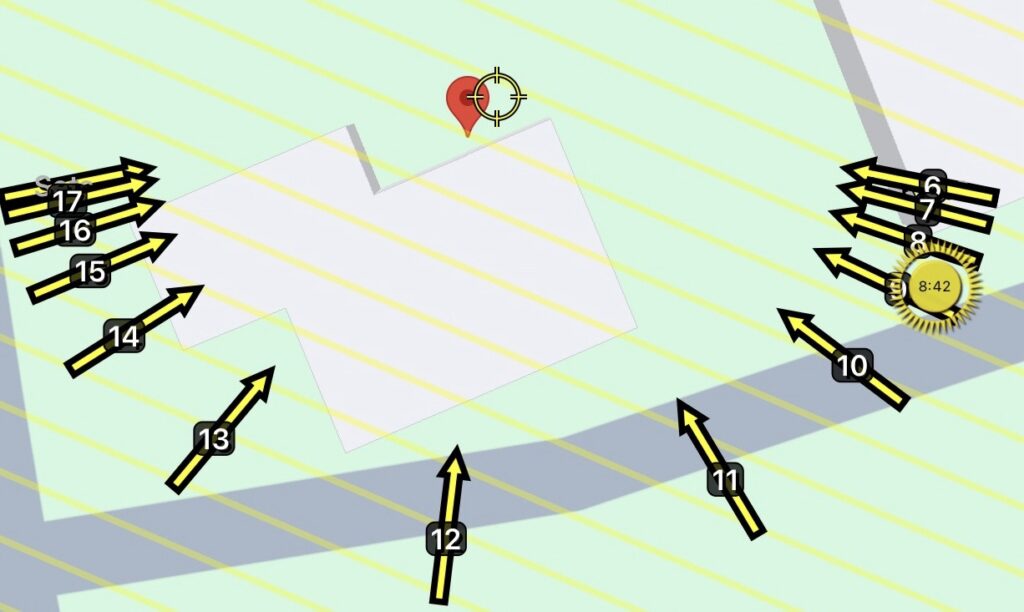
I used the Sun Seeker app to get a good idea of sun exposure on my property throughout the year:
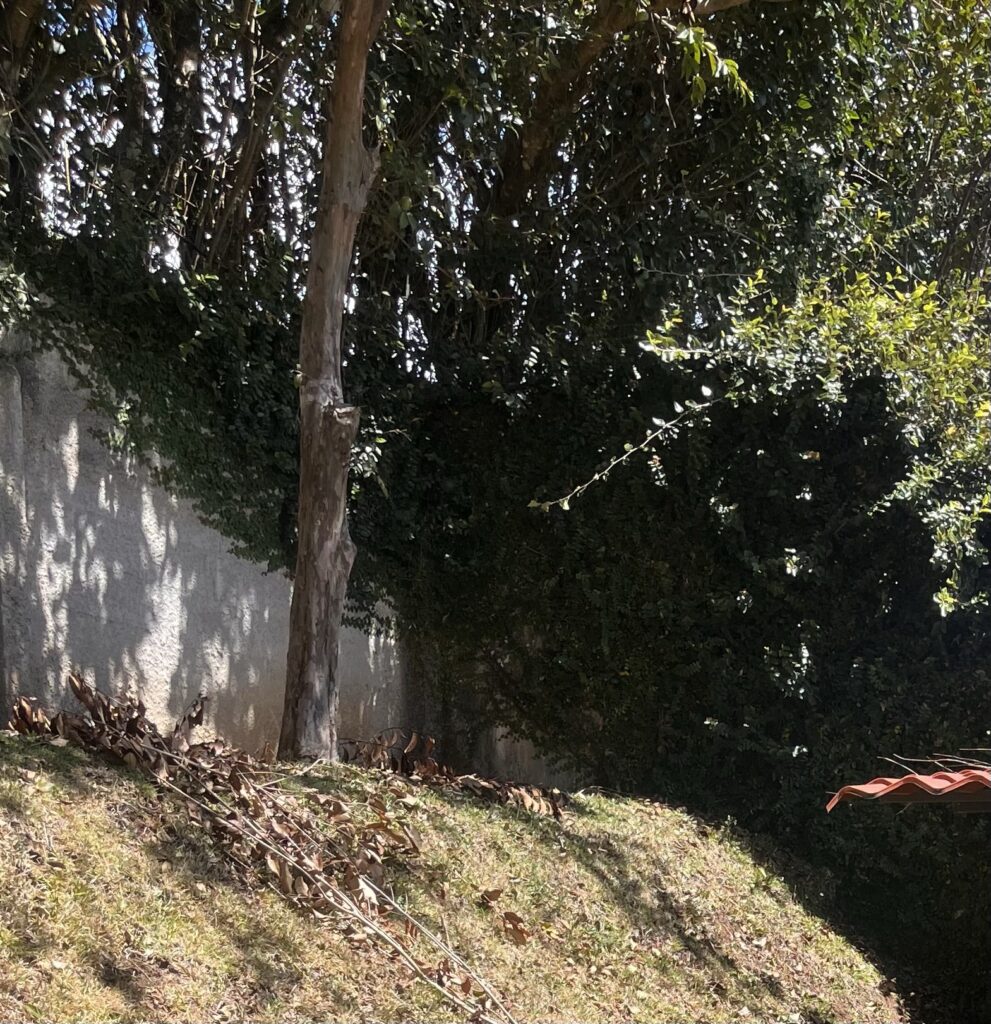
The northern end of my backyard is covered by a native species known as [?]. It provides good cover against rain and wind.
With this in mind, I settled on the north-eastern corner of my yard:, which is also had the benefit of being well hidden.
July – Breaking Ground
Now it was time to start digging. I didn’t really have a technique and just started shoveling my way as far down as I could.
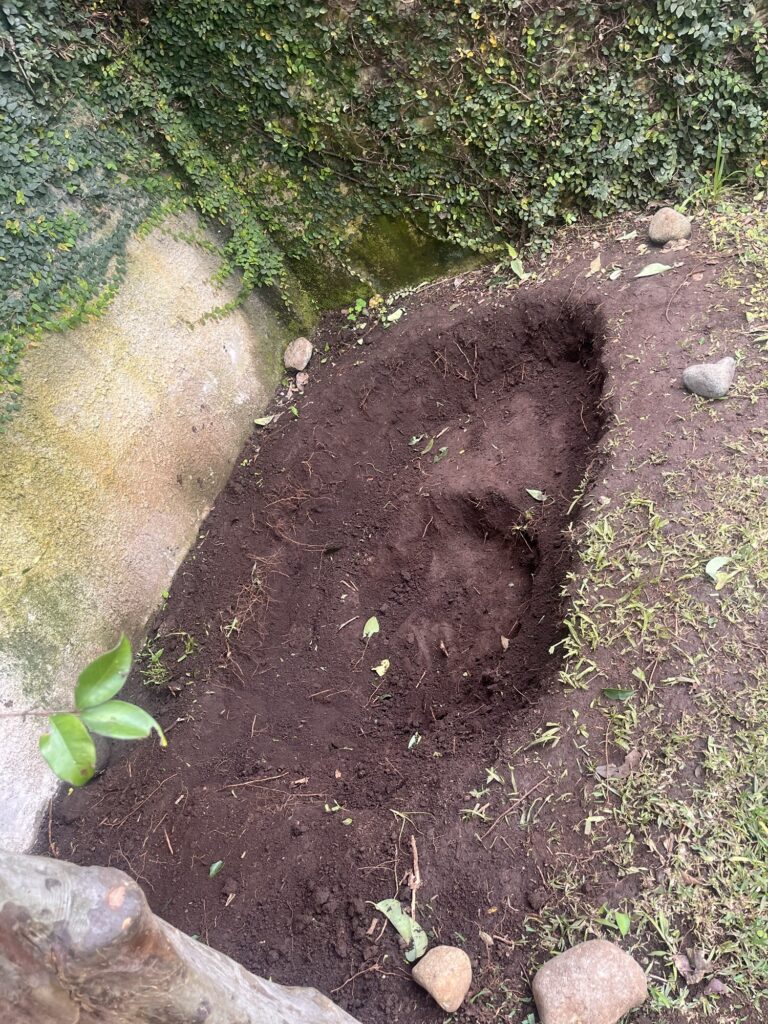
Once I had a decent enough hole, I added the base layer of plastic:
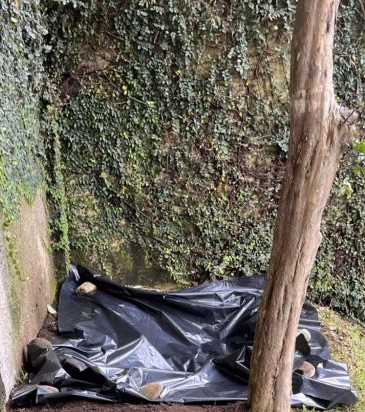
I then bordered the edges with river rocks and filled it with water.
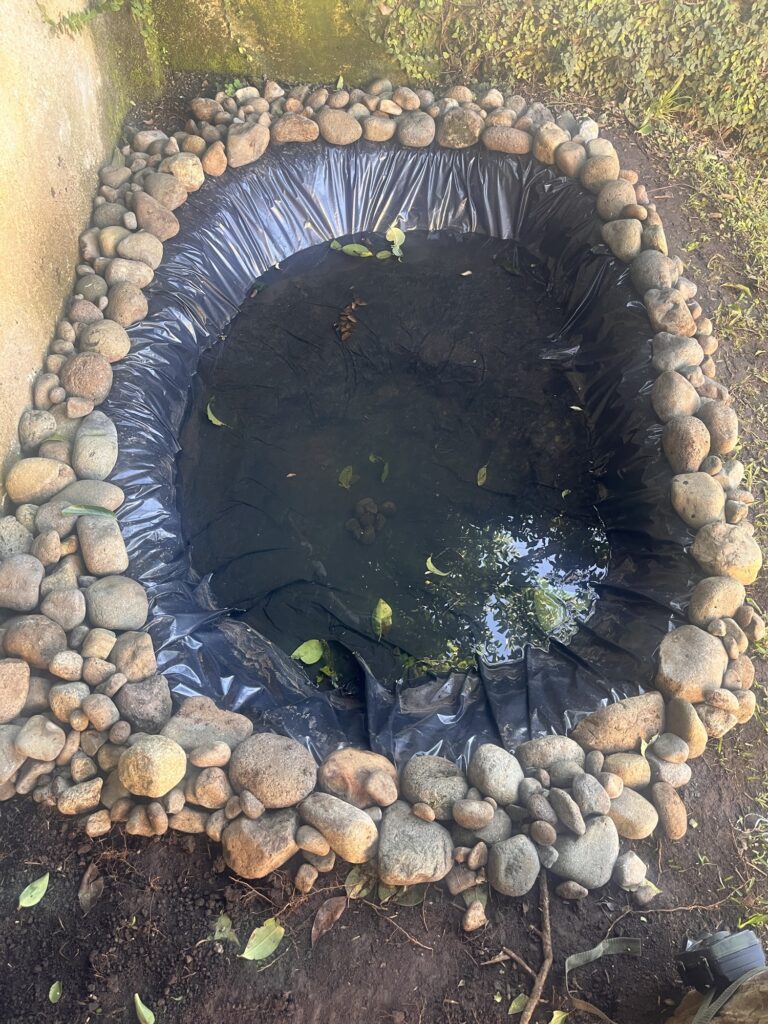
I left it in this state for a few days and then decided to fill it up a bit more. It was at this point I found out I needed to redo the lining as well as level out the terrain below.
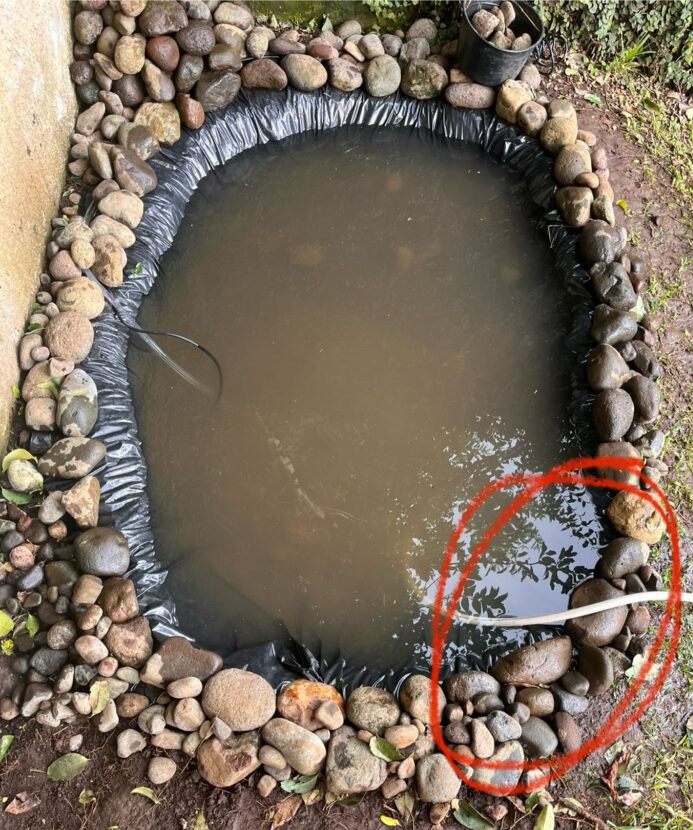
Another problem I had was loss of water level over time. I found out this was due to a root poking through the lining. I decided to redo the lining completely, this time using a base layer of “Geotextile” which would hopefully prevent any roots or other sharp debris from penetrating the plastic liner.
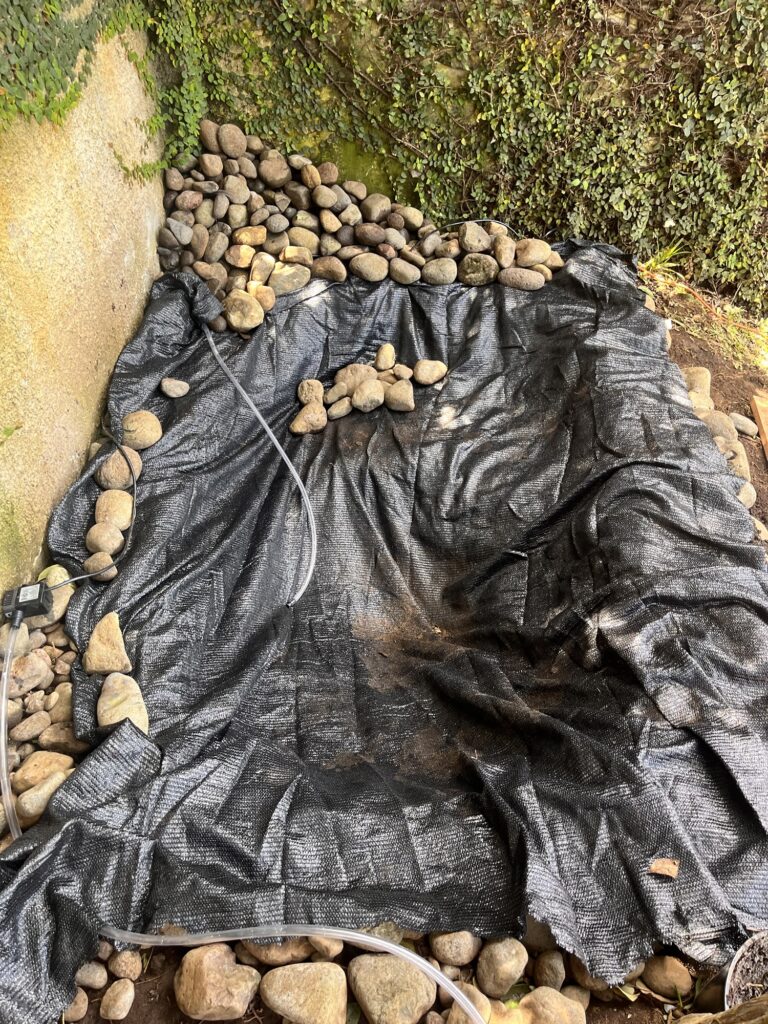
I added a layer of durable cloth and then fine beach sand to act as additional protection.
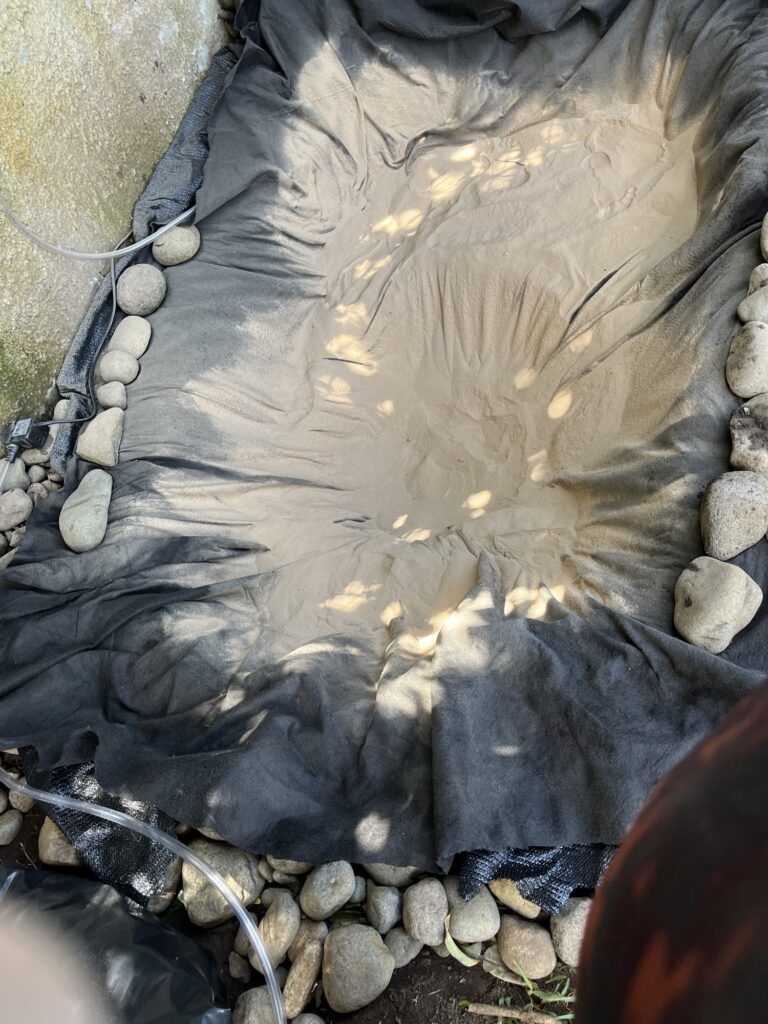
After some intermediate steps that I don’t have pictures for, I had a pond that was no longer overflowing nor losing water due to leakage:
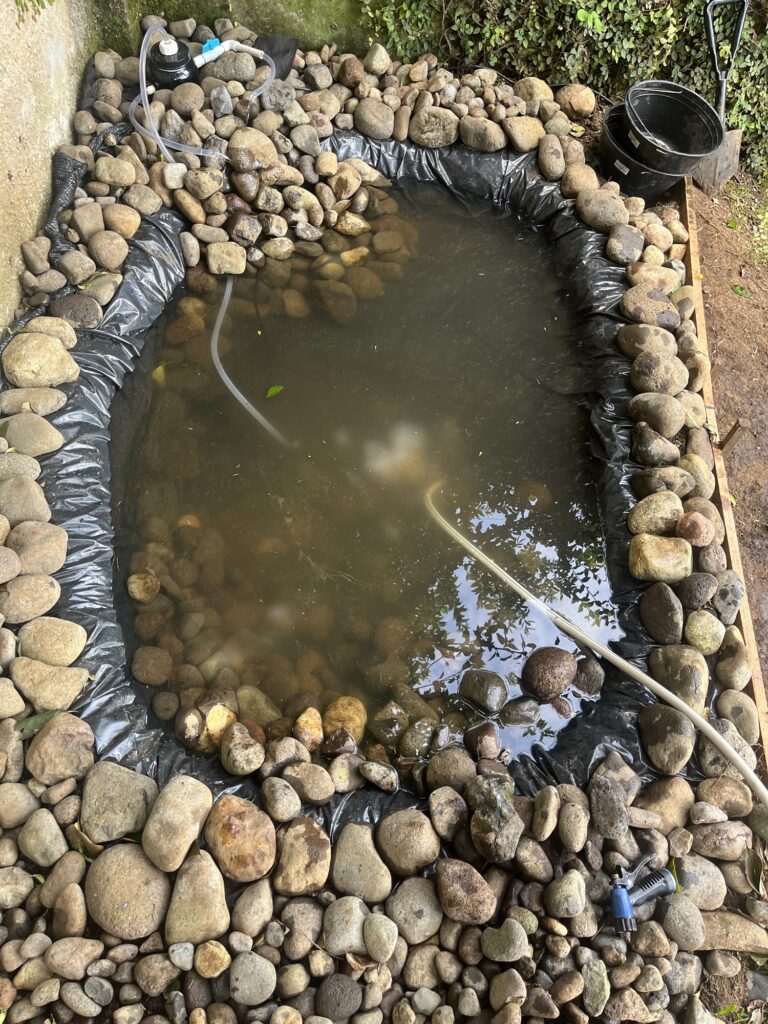
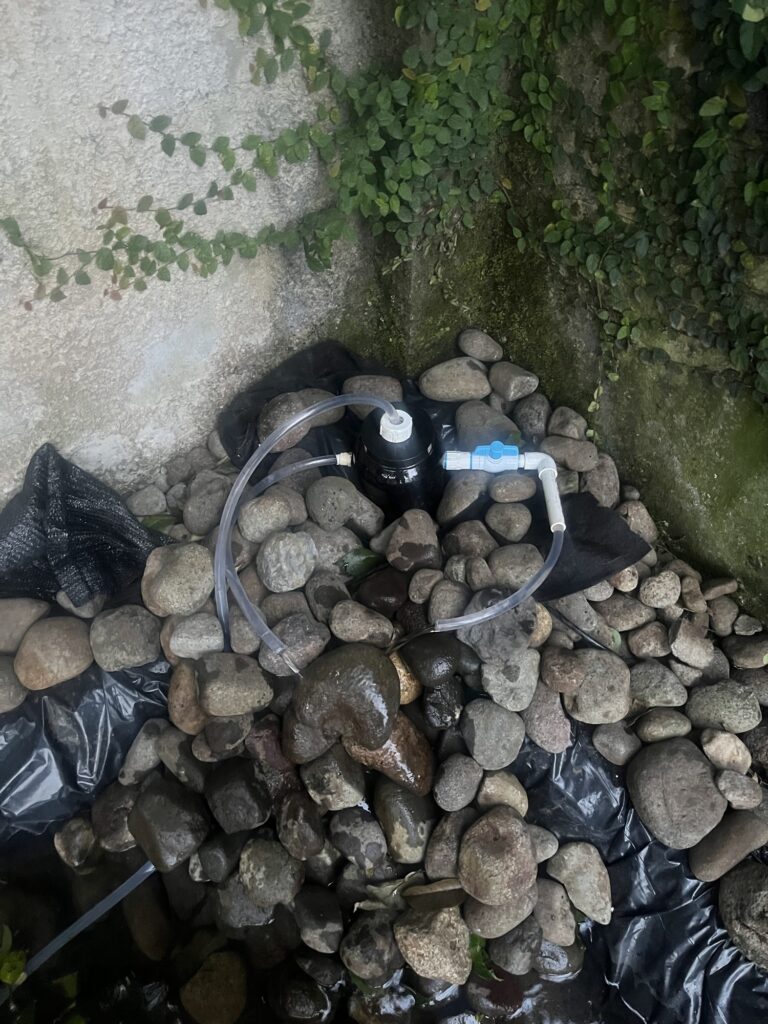
There are a couple things in the picture above worth mentioning. The right side of the pond has a barrier to hold the filling I added to level it out. Notice as well the DIY filter on the upper left corner.
August – Filtering
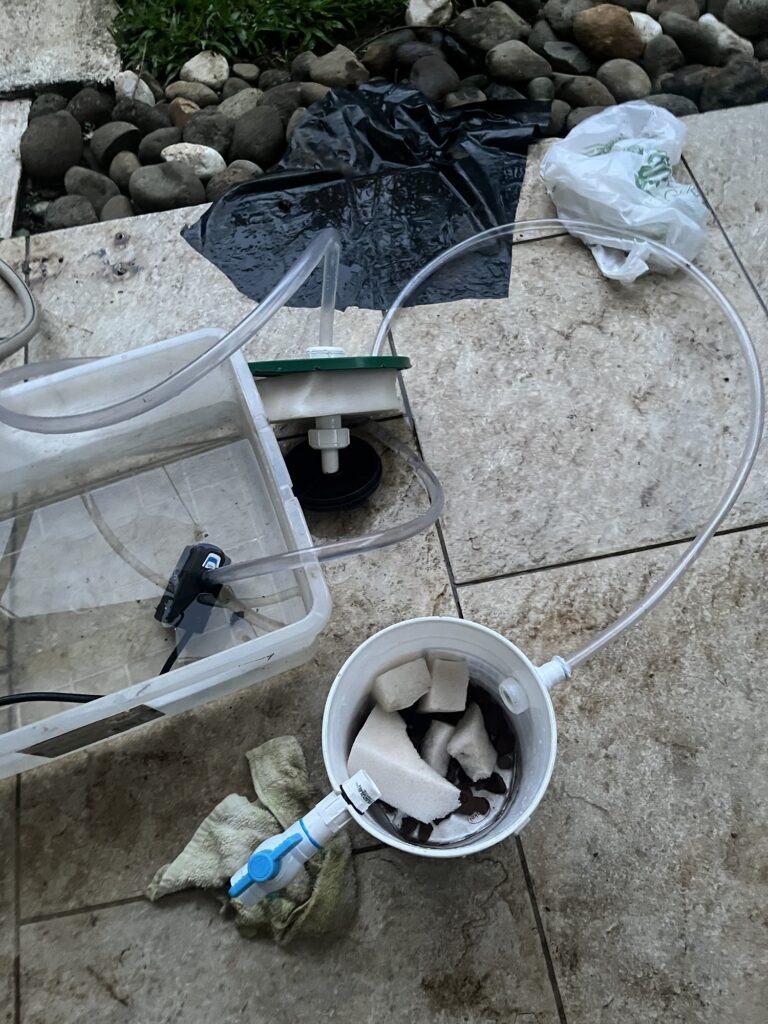
One of my concerns during the first weeks of having the pond was water cleanliness. To address this I built a filter out of an old paint bucket (and then an old protein bucket as you will see in later pictures) filled with volcanic rocks, foam and a few activated charcoal filters. A water pump would pull dirty water from the pond in through the top of the filter, which would pipe it to the bottom of the bucket. The water would then slowly fill the bucket, going through the filtering material in the process, until it exited through the top.
September – Wildlife
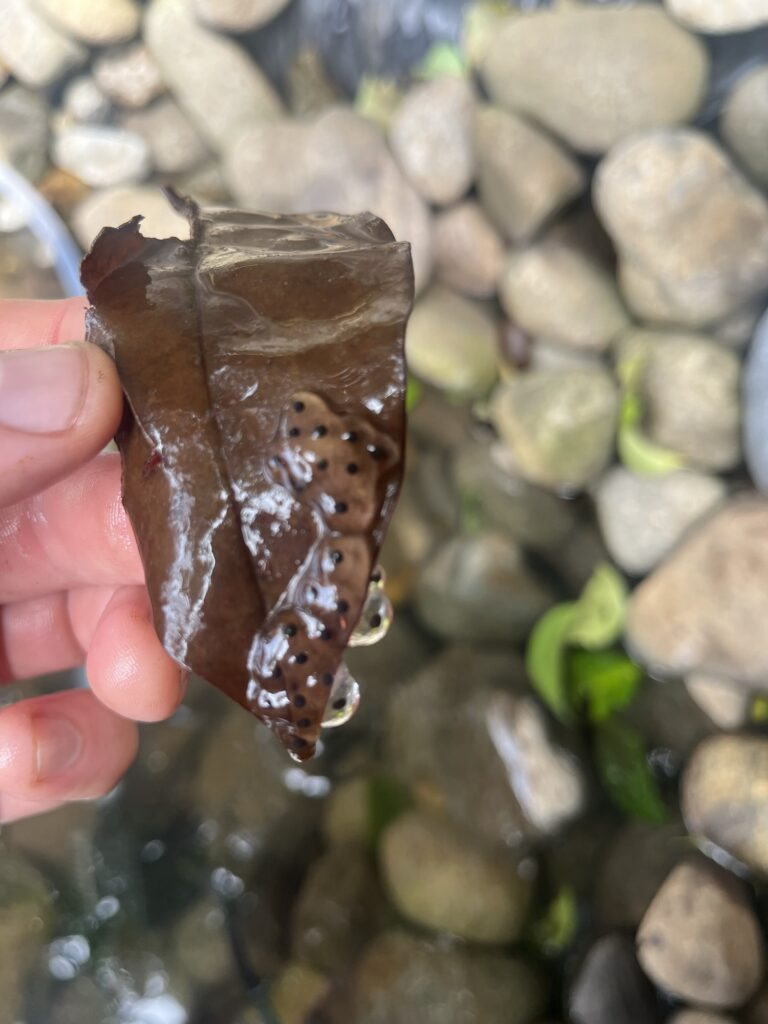
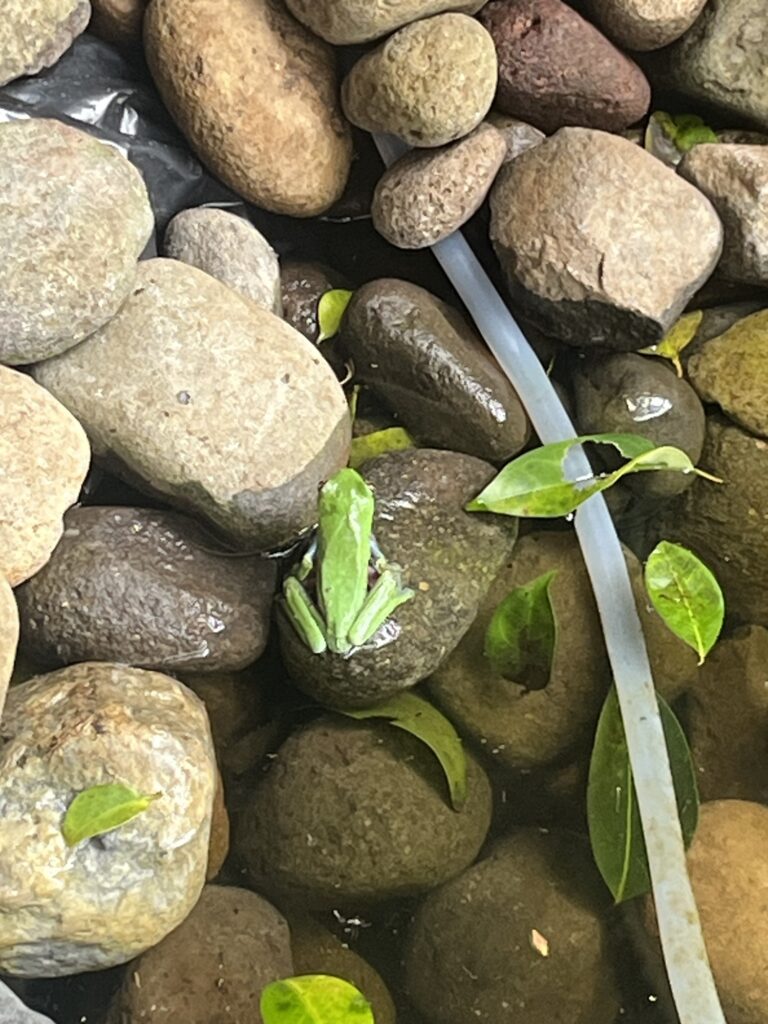
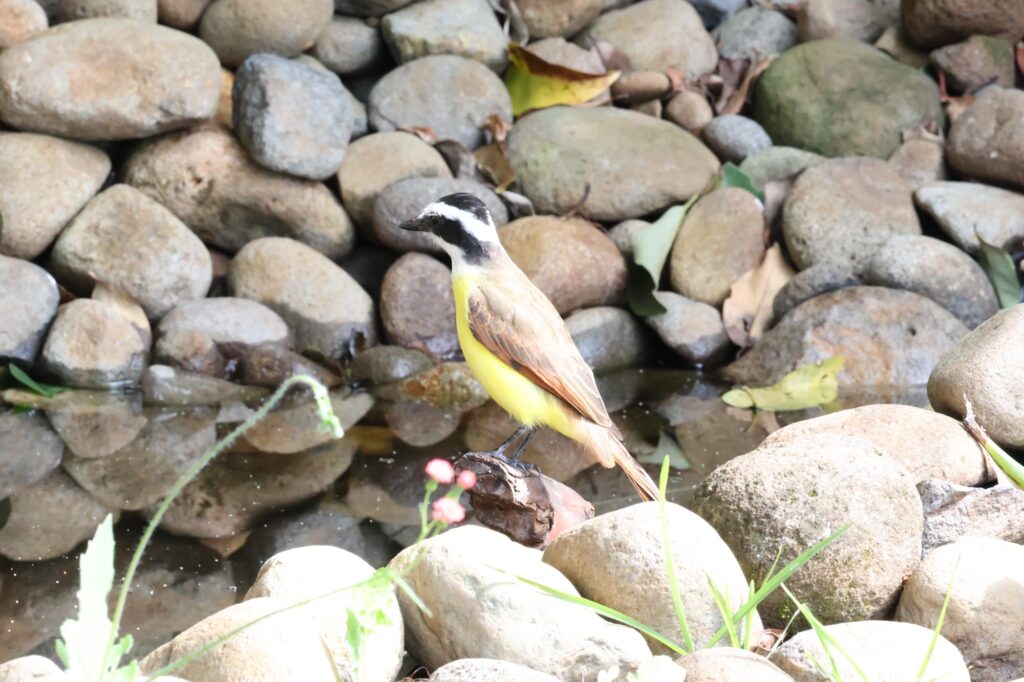
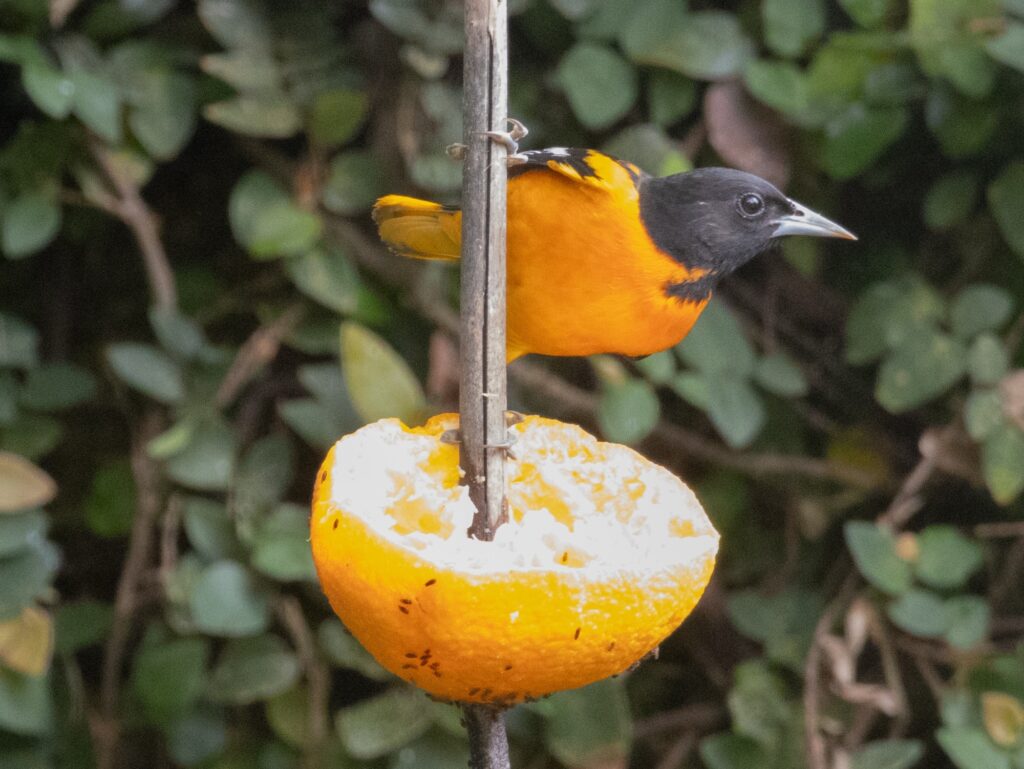
After a couple months of building the pond I started to signs of wildlife! First I found frog embryo’s covering the pump hose and dead leaves that had fallen into the pond. I also came across a blue-sided tree frog hanging out on the rock shore.
October – Mosquitoes
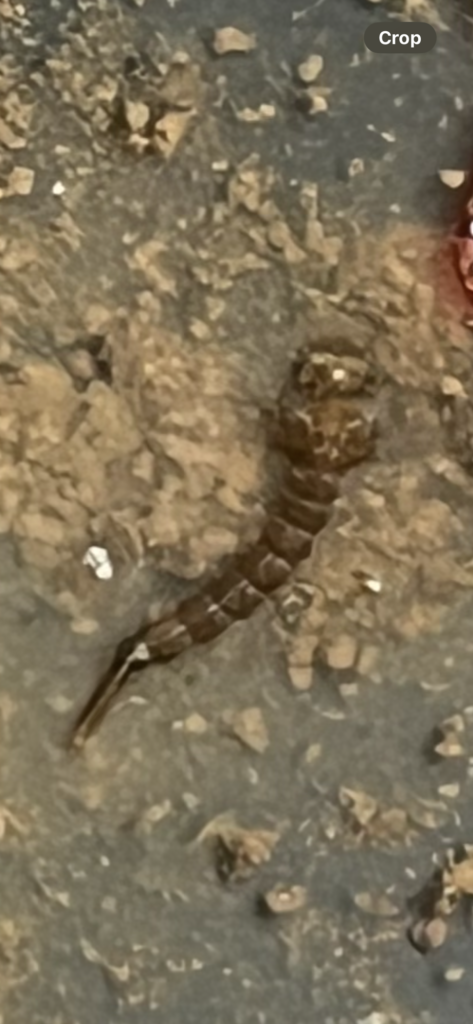
October is the rainiest month of the year in Costa Rica. This meant my pond level was higher than usual, and the temperature fluctuated as well. I don’t have exact data on any of the variables but it seems my pond was a perfect breeding ground for mosquitoes and possibly the Dengue fever carrying Aegis aegypti variant. This was almost a showstopper for me and I immediately drained the pond in fear of causing an outbreak of deadly disease in my neighborhood.
November – Solutions
There are various ways to get rid of pond infestations [3], one of which is to use poison, but considering this is an eco pond, that would be my last option. The first thing I did was to get fish. I was told that the best fish for mosquito control is the Guppy (Poecilia reticulata) as well as the swordtail (Xiphophorus hellerii). I purchased about 4 of each and added them the pond. They ate up the larvae happily and I haven’t had any problems since.
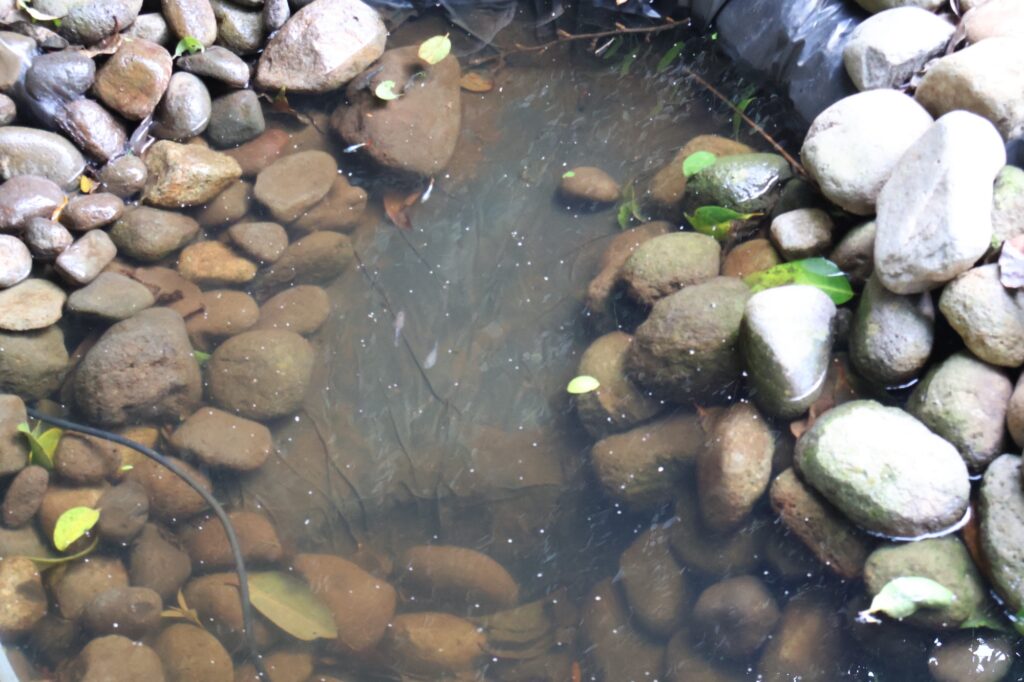
Another recommendation is to avoid water stagnation, so I bought an air bubbler. This had the added benefit of oxygenating the water for the fish as well.
2025 – Letting it grow
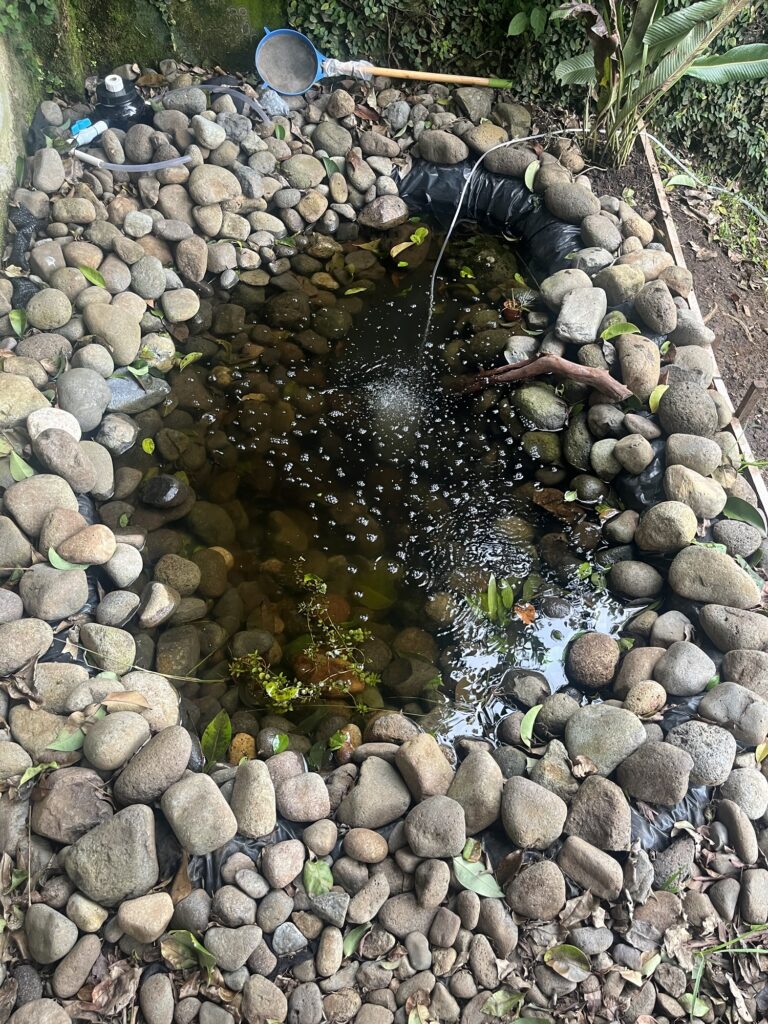
2025 went by fast and I didn’t really do anything major to the pond. I did take a few pictures here and there, and you can see how nature started to take over.
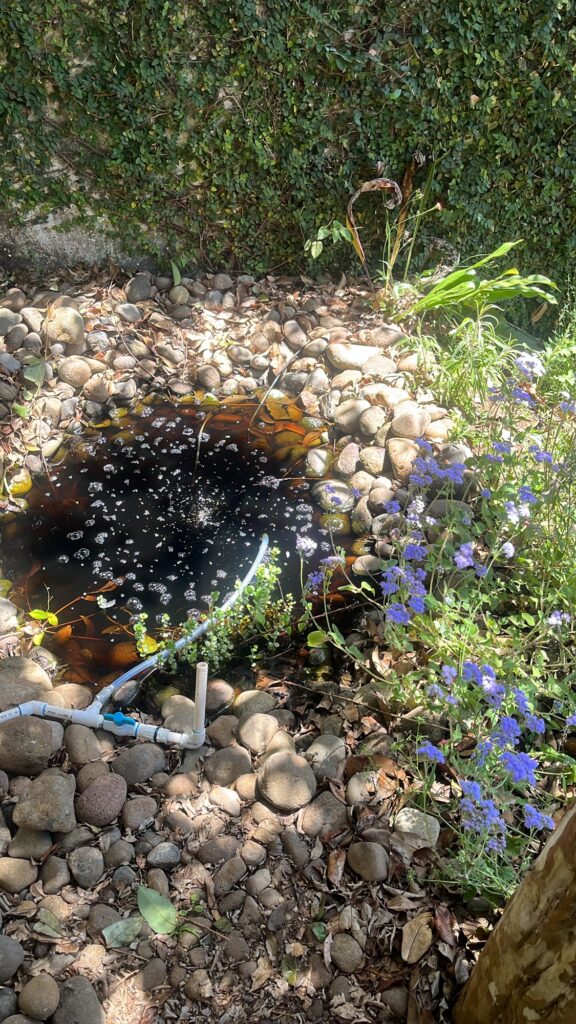
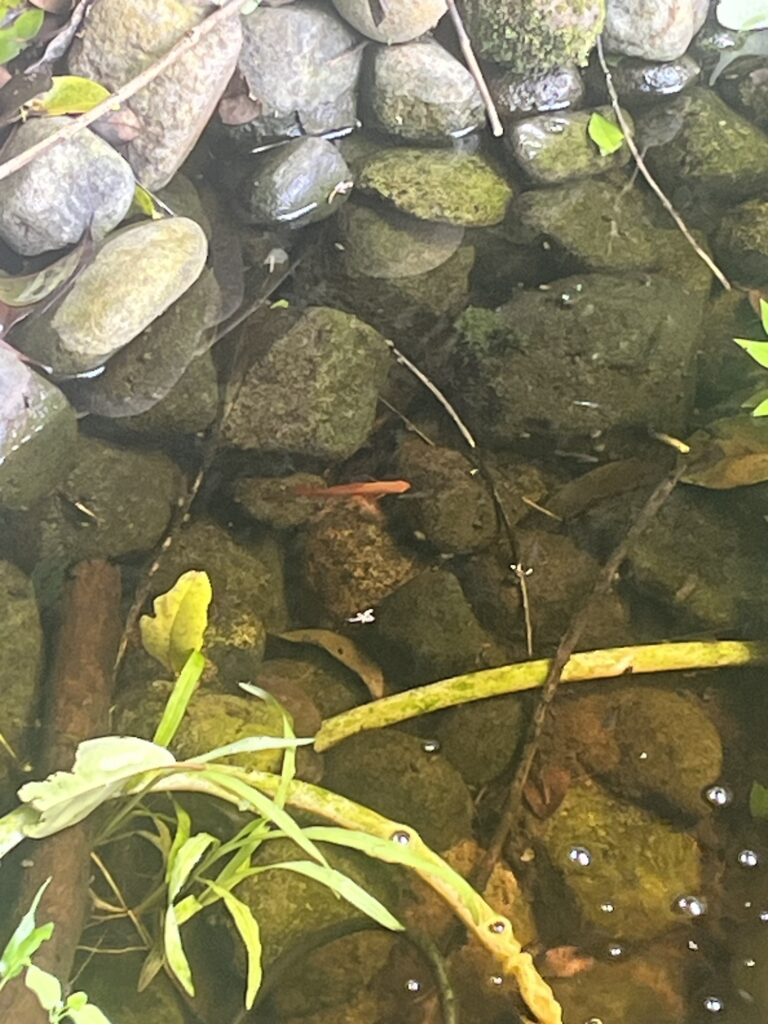
I don’t have any hard data on this, but the pond seems to self-regulate it’s level across time, as I never have to fill it and it never overflows. It’s almost as if the amount of rain that eventually get’s into it is similar to the amount of water evaporating from the surface.
2026 – Current status and future plans
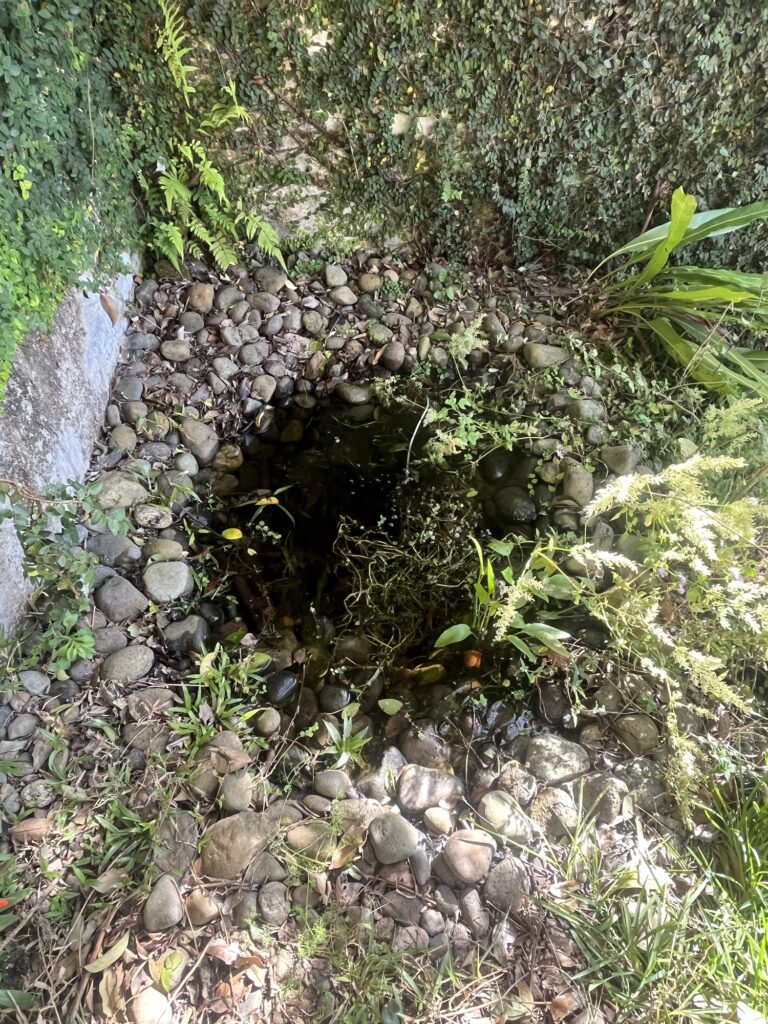
I have started seeing more algae and while it is still at a healthy level, I fear it will start to overgrow soon. I am planning on adding a few plant species that can compete with the algae and are also native to my region.:
- Hornwort (Ceratophyllum demersum): seems to be the most popular option for ponds and aquariums.
- Water cabbage (Pistia stratiotes) : Inspired by a neighbor’s rainwater collection reservoirs, I have a feeling it is going to want more sun, but I’ll give it a shot regardless.
I also want to re-do the “roof” as the current setup is a chicken wire held+ bamboo structure that is not aesthetically pleasing at all.
Leave a Reply